Berchtesgaden Food: Local Dishes and Where to Eat Them
Berchtesgaden food means Schüsslkas alpine cheese, smoked Schwarzreiter from the Königssee, Stuck pastry and beer from the town's Hofbrauhaus.
On this page
Berchtesgaden food is mountain cheese, lake fish and beer before it is anything else. The three dishes worth planning a day around are Schüsslkas, a cheese specialty made on alpine pastures and produced almost only in this corner of Bavaria; Schwarzreiter, small smoked char from the Königssee; and Stuck, an autumn pastry. This guide takes each in turn, then shows where to sit down for it, from the town brewery to two restaurants holding two Michelin stars.
The town sits in a narrow valley, so the food follows the landscape: dairy cows on high summer pastures, cold clean water for the fish, and beer brewed close to where it is drunk. A lunch of cheese and bread after a hike tastes different from the same plate in Munich because it was made a few valleys away.
What Berchtesgaden food is
Berchtesgaden's cooking leans on dairy, freshwater fish and beer, rooted in the alpine pastures and lakes around the town rather than in a long urban restaurant tradition. The regional tourism board presents the local cuisine as part of the area's culture. That means the dishes to chase are cheese made on the alps, fish smoked by the lake, and beer from a brewery that has shaped the town for generations.
Berchtesgaden sits in the far southeastern corner of Bavaria, close to the Austrian border, and its food overlaps with the Salzburg side of the Alps more than with the beer halls of Munich. The pastures and lakes around it supply the milk and fish that define the local plate.
Schüsslkas: the alpine cheese made almost only here
Schüsslkas is a traditional cheese specialty made on the alpine pastures and produced almost exclusively in the southeastern Bavarian Alps. It is the single clearest taste of the region: the summer grazing on the alps gives the milk its character, and the wheels are made and aged in the same place.
Order it plain with bread so the cheese is the point, and treat a small slice as enough alongside a beer or a glass of milk. If you only have one savory break in the day, make it this one.
Schwarzreiter: the lake fish smoked on hazelnut grates
Schwarzreiter are small char, strung on thin wooden sticks and smoked over a hazelnut grate by the fishermen of the Königssee. They are a lake specialty you will not find done this way anywhere far from the water.
Treat them as a snack rather than a main meal: the fish are small, served whole, and eaten off the stick, so they work well with a beer at the end of a lake walk. Skip a heavier lunch if you plan a fish stop later.
Stuck: the autumn pastry
Stuck is a local pastry sold from the start of the school year to St. Nicholas Day in early December. It appears for a few weeks in late autumn, tied to the season.
If you visit in summer, do not build a plan around Stuck; if you visit in October or November, ask at a bakery or café counter. This is the sort of regional food that appears on menus for a few weeks and then vanishes, so timing matters more than hunting for a specific address.
Hofbrauhaus Berchtesgaden: the town brewery
Hofbrauhaus Berchtesgaden is the town's own brewery and, for generations, has shaped its character and traditional way of life, supporting the region as a patron, partner and employer for many local families. It is the answer to the question of what to drink with all of the above, and the natural place to start if you want to understand the town through its beer.
Order a small pour first, then settle in with a full glass once you know what you like. The beer is brewed close to where it is drunk, which is the whole point of a stop here.
If the weather is good, a beer garden makes the most of a warm afternoon, and the same beer tastes better outside. If it is cold, a Brauhaus beer hall is the sensible indoor option.
Cheese straight from the maker: the Dorfkäserei at Königssee
At their village cheese dairy at Königssee, Ramona and Nicholas Mühlbauer make a range of raw milk cheeses in traditional copper kettles, using regional milk. This is a working dairy where you can buy cheese from the maker.
Buying cheese from the maker and eating cheese in a tavern are two different things, and both are worth doing. The dairy makes and sells the local raw milk cheeses; a Gasthaus cooks regional dishes and serves them warm.
Fine dining in town: PUR and SOLO DU
Berchtesgaden holds two restaurants with two Michelin stars each. PUR, led by Chef Uli Heimann at the Kempinski Hotel Berchtesgaden, and SOLO DU at Kulturhof Stanggass, led by Chef Zsolt Fodor, both hold the two-star rating.
The Michelin Guide also gives a Green Star, its mark for sustainable gastronomy, to Maximilian Kühbeck's Berchtesgadener Esszimmer and to Lockstein 1, where Christl and Gabi Kurz cook. That is four places in the area with some form of Michelin recognition.
The practical split is straightforward: put a two-star dinner on the evening after a big hike or as the reason for a special trip, and keep the other meals simple. A long tasting menu is a heavy finish to a day of walking, so reserve before you travel if you want a set-piece dinner.
Eating well without the splurge: inns and taverns
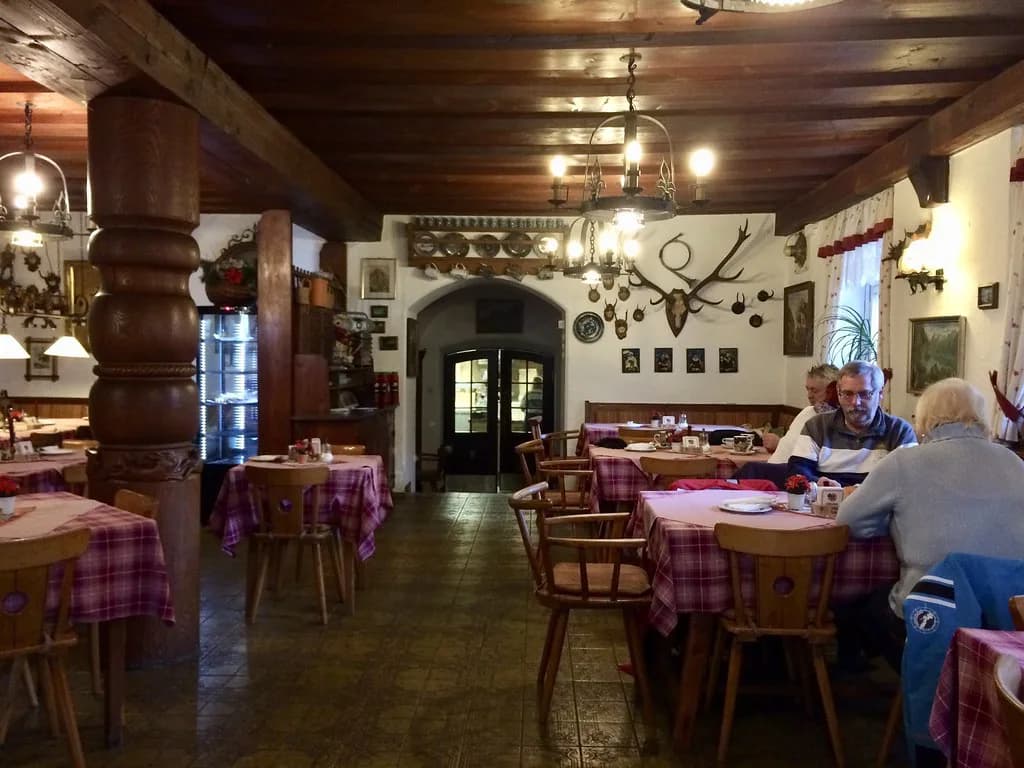
Berchtesgaden's everyday eating is traditional taverns and rustic beer gardens serving regional cooking. These are the places for a plate of cheese, a roast, or a simple hot dish after a hike.
Expect a mix of Bavarian standards and local dishes, and a casual, family-run tone. The dining tips the region publishes, and the restaurant pages of the local town magazine, list a spread of options, with the magazine naming GENUSS by Branka, Ristorante da Branka and Gasthof Bier-Adam, but treat a directory as a starting point rather than a verdict.
For something quicker than a sit-down meal, look for an Imbiss or a bakery counter, which is often the cheapest way to eat well in a mountain town. I would not use a snack stand as a substitute for a proper Schüsslkas plate, though; save that for a tavern.
How a Berchtesgaden meal runs: ordering, portions and paying
Order at the table and expect to pay at the end; in most Bavarian inns you signal for the bill rather than being brought it automatically. Portions are generous, so a soup and a main is usually enough for one person, particularly at lunch.
Many traditional places in Bavaria still take cash, so carry some euros even if you plan to pay by card. Tipping is done by rounding up or adding a few percent and telling the server the total you want to pay.
The town runs on seasons: autumn brings Stuck, summer brings outdoor seating and lake fish, and the quiet weeks between are when you have the best chance of a table without waiting. Build your eating day around the season you are in rather than a fixed list.
Where to start if you have one food day
With one day, eat Schüsslkas and bread at lunch, take a walk to the Königssee in the afternoon for Schwarzreiter and a beer, and either keep the evening simple at a tavern or book a two-star table for a proper celebration. That covers the three local specialties and the brewery without eating three heavy meals in a row.
The other easy swap is brunch: a slow late-morning start, then one substantial local meal in the afternoon.
Which Berchtesgaden meal should you book first?
Book the two-star table first if it matters to you, then build simpler days around cheese and fish. Rewarding cooking is easier to find here than a long list of restaurants, so choose the experience you want rather than collecting names.
For practical updates on what is being served and when, the Berchtesgaden tourism site publishes the regional specialties and dining listings, and the local magazine keeps a running restaurant page.
Explore more Berchtesgaden guides
Frequently Asked Questions
What is Schüsslkas?
Schüsslkas is a hard alpine cheese made on the high pastures of the southeastern Bavarian Alps and produced almost exclusively there. It is the region's signature cheese and is best eaten plain with bread so the flavor comes through.
Where can I try Schwarzreiter?
Schwarzreiter are small char smoked by fishermen on hazelnut grates at the Königssee, so look for them near the lake rather than in the town center. They are small whole fish served on sticks and eaten by hand, best treated as a snack.
Does Berchtesgaden have Michelin-starred restaurants?
Yes. Restaurant PUR at the Kempinski Hotel Berchtesgaden and SOLO DU at Kulturhof Stanggass both hold two Michelin stars. The Michelin Guide also gives its Green Star to Berchtesgadener Esszimmer and to Lockstein 1.
When is Stuck available?
Stuck is sold from the start of the school year until St. Nicholas Day, so it appears for a few weeks in late autumn. Plan around that window if you want to try it.
Is Berchtesgaden good for beer?
Yes. Hofbrauhaus Berchtesgaden is the town's own brewery and has shaped local life for generations, so it is the obvious place to drink with the region's cheese and fish cooking.
Sources
Notes for your next German food trip
Optional updates to our guides.
You might also like
Continue reading
More guides you'll find useful