Vegan and Vegetarian Food in Ulm: Where to Eat Meat-Free
Vegan and vegetarian eating in Ulm starts with knowing which kitchens list meat-free dishes and which Swabian classics can be ordered without meat.
On this page
Ulm is a decent city for vegetarian travelers and a manageable one for vegans, provided you order deliberately rather than assume a meat-free default. The city's official restaurant list groups kitchens by cuisine and address, naming traditional Swabian-Bavarian Wirtshäuser alongside Italian, Asian, Mexican and international options on both banks of the Danube. This guide picks out the addresses worth knowing, explains which Swabian dishes are naturally meat-free, and gives you the German you need to ask what is actually in the pot.
Two things shape a meat-free day here. First, Swabian cooking leans on butter, cheese, egg and broth, so vegetarian is usually easier than vegan. Second, several of the most useful addresses sit in Neu-Ulm rather than Ulm proper, which means crossing the river rather than hunting around the Münster.
What meat-free eating looks like in Ulm
The city tourism office publishes an alphabetical overview of restaurants in Ulm and Neu-Ulm, and each entry carries an address and, for most, a cuisine label such as Swabian-Bavarian or international. That list is a directory, not a vegetarian ranking, and it does not flag which kitchens cook vegan food. Use it to find a street and a kitchen style, then ask at the table.
In practice, meat-free eating in Ulm splits into three routes: traditional Wirtshäuser for cheese-and-pastry Swabian dishes, Italian and international kitchens for pasta, pizza and bowls, and cafés for a lighter lunch. The spreads on offer are documented in our guide to Ulm food, which covers the region's signature plates in more detail.
Swabian dishes that can be meat-free: Käsespätzle, Maultaschen and Flädlesuppe
Käsespätzle are soft egg noodles layered with grated cheese and topped with fried onions, and they are the safest vegetarian order in a Swabian kitchen as long as the kitchen confirms the cheese is made with rennet you accept. Maultaschen are large pasta pockets filled with a spinach and herb mixture that often includes meat, so ask which filling is in them before ordering.
Flädlesuppe is a clear broth with strips of thin pancake, and the pancake itself is meat-free while the broth usually is not, which makes it a vegetarian dish only if the kitchen uses a vegetable stock. Anything described as in der Butter or mit Butter is cooked in butter rather than oil, and vegan travelers should say so.
Spätzle and Maultaschen are also the dishes most likely to be finished with speck or served beside a meat plate, so order them as a main course rather than a side. If you want the wider picture of Swabian cooking before you sit down, read What to Eat in Ulm first and arrive with two or three dish names ready.
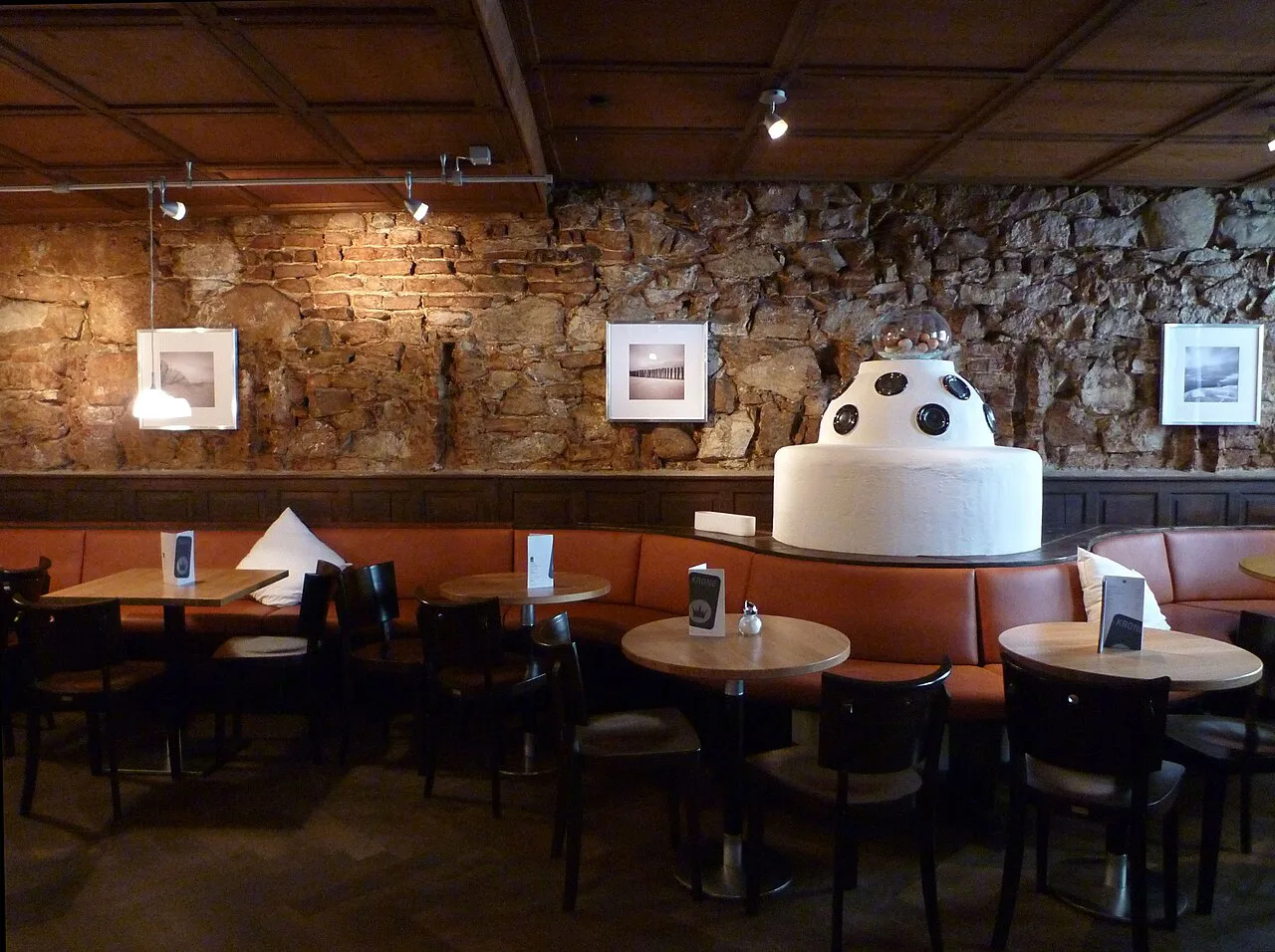
Vegetarian-friendly restaurants in Ulm from the city's official restaurant list
The tourism office listing names Restaurant Gerberhaus on Weinhofberg, Herrenkeller on Herrenkellergasse and Zum Haberfelder on Neue Straße among the Swabian-Bavarian kitchens in central Ulm. All three sit within a short walk of the Münster, which makes them practical for a sit-down lunch.
On the Neu-Ulm side, Gasthaus Schlössle in Offenhausen is listed under the German descriptor 'Traditionslokal mit BierKultur', and the Hotel-Restaurant Hirsch in Finningen is listed with Swabian-Bavarian cooking. Restaurant Grenzstube at Seligweiler sits further out along the road toward the motorway and is a realistic stop if you are arriving by car.
For a fuller spread of the city's tables, including the traditional addresses above and the international kitchens further down this guide, see our roundup of the best restaurants in Ulm.
Brewery kitchens and Wirtshäuser in Ulm
Ulm's brewery kitchens are the most atmospheric places to sit down for Swabian food, because the menu style is the same as any Wirtshaus and the building does half the work. Barfüßer Hausbrauerei Ulm on Neue Straße brews on site and is listed as a Swabian-Bavarian kitchen, and Historisches Brauhaus Drei Kannen on Hafenbad is listed in the same category.
Along Fischergasse, close to the river, the Gaststuben im Zunfthaus der Schiffleute and Zur Forelle are both listed as Swabian-Bavarian kitchens in historic buildings. Wirtshaus Zur Brezel on Ulmer Gasse completes the cluster of traditional addresses in the old town.
Brewery kitchens are also where you will find the local beer styles worth trying alongside the food, and our Ulm beer guide explains what is brewed in the city and how the beer garden season works.
Cafés and international kitchens in Ulm for a meat-free lunch
Beyond Swabian cooking, the city list includes Italian, Asian, Mexican and international kitchens, which is where to look when you want vegetables rather than cheese. Tanivera Pizza e Pasta on Weinhofberg is listed as Italian, Yoko on Judenhof as Asian cooking and Hungry Turtle on Schaffnerstraße as Mexican.
On Münsterplatz, Café Restaurant Stadthaus Ulm is listed under international cuisine and Café Extrablatt Ulm sits at number 7, both of which make an easy stop between the station and the cathedral. If you want a coffee and cake break rather than a full meal, our guide to Cafés in Ulm covers the Kaffee und Kuchen side of the city.
Breakfast is the meal where meat-free eating gets awkward, because the Swabian plate usually includes cold cuts and sausage. Our guide to breakfast in Ulm covers where to start the day without them.
How to ask for a vegan dish in German: ordering phrases that work
The two words that do most of the work are vegetarisch for vegetarian and vegan, which Germans pronounce close to “vay-GAHN” and use as-is. Ask “Ist das vegetarisch?” to check a single dish, or “Haben Sie etwas Veganes?” if you want the kitchen to suggest something.
For the ingredients that trip people up, learn three more: Brühe is broth, Speck is bacon and Schmalz is rendered fat, all of which turn up in otherwise vegetable dishes. “Ohne Speck, bitte” and “Mit Gemüsebrühe?” cover most situations, and “Ich esse kein Fleisch und keine Wurst” states the whole rule in one sentence.
If you want to be precise about dairy, say “ohne Butter und ohne Käse” and expect a shorter list of options. In a busy Wirtshaus at lunch, asking before you sit down saves a second conversation once menus are on the table.
Reading a Swabian menu for hidden meat, broth and lard
Swabian menus hide meat in places a translation app will miss. Broth-based soups, dumplings finished in butter with speck, and anything described as gebraten or geschmälzt may carry animal fat even when the main ingredient is vegetable.
Lard shows up as Schmalz on bread platters and as a cooking fat in potato dishes, and cold plates often include Leberwurst or Presssack unless you ask for them to be left off. The safe pattern is to order a named cheese or pasta dish and ask about the fat and the broth in the same breath.
One practical habit helps more than any list: order the Swabian dish you came for, then ask the kitchen to confirm the stock and the fat. That single question usually decides whether a plate works for you.
Which Ulm table should you book for a meat-free meal?
For a first meat-free evening in Ulm, pick a brewery kitchen or a traditional Wirtshaus in the old town and order Käsespätzle or Maultaschen after asking about the filling and the fat. If you want vegetables rather than cheese and pastry, look instead at the international addresses around Weinhofberg, Judenhof and Schaffnerstraße.
Use the city's restaurant list to match a street to a kitchen style, keep the two German questions ready, and treat the traditional menu as a conversation rather than a fixed list.
Frequently Asked Questions
Is Ulm good for vegan travelers?
It is workable rather than easy. Ulm has a solid spread of Italian, Asian, Mexican and international kitchens alongside traditional Swabian Wirtshäuser, so finding a meat-free meal is realistic, but vegan dishes need asking for. Learn the phrase for vegan and the words for broth, bacon and butter, and ask the kitchen before ordering.
Do German restaurants in Ulm have vegan options?
Some do, but the city's official restaurant list groups kitchens by cuisine and address rather than labeling vegan dishes, so you cannot tell from the listing alone. Ask whether a dish is vegan, and expect the answer to depend on the broth, the butter and the cheese. Brewery kitchens and Wirtshäuser are the least predictable; Italian and international addresses tend to adapt more readily.
How do I say vegan in German?
Vegan is the same word in German, pronounced close to “vay-GAHN.” Ask “Ist das vegan?” for a specific dish or “Haben Sie etwas Veganes?” to let the kitchen suggest something. Add “ohne Butter und ohne Käse” if you want to be precise about dairy.
Sources
Notes for your next German food trip
Optional updates to our guides.
You might also like
Continue reading
More guides you'll find useful