German Restaurants in Bonn: Where to Eat Traditional Food
German restaurants in Bonn range from a Brauhaus pouring Bonn's own Bönnsch beer to riverside beer gardens serving Weißwurst, Leberkäse and Schweinshaxe.
On this page
For a German restaurant meal in Bonn, start with Brauhaus Bönnsch in the Altstadt: it pairs Bonn's own top-fermented beer with hearty Rhineland classics, and it is the one stop that gives you both the city's beer and its pub food in a single evening. Everything else divides into two tracks — Wirtshaus cooking such as Wirtshaus Salvator am Martinsbrunnen, where bürgerliche Küche means solid home-style dishes, and the Bavarian-style beer gardens on the Rhine.
What follows covers what each place is, the specific dishes to order, and how the midday lunch specials and dinner booking work in Bonn.
What German Food Looks Like in Bonn
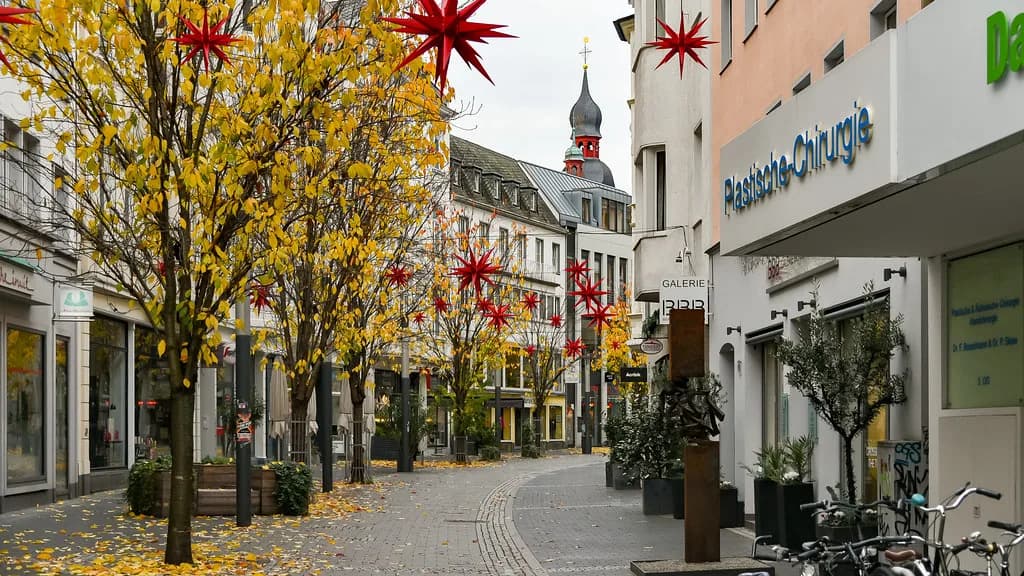
Bonn sits on the Rhine in the Rhineland, and its pub cooking follows the regional pattern: roasts, sausages, potato dishes and beer served in generous portions. What surprises visitors is the Bavarian streak. Along the river you find beer gardens grilling Leberkäse (a finely ground meat loaf, sliced and pan-fried) and Schweinshaxe (roast pork knuckle) and pouring Bavarian wheat beer under chestnut trees. If you want the fuller picture of the city's dishes beyond the German venues here, start with what to eat in Bonn before you book a table.
That means a single evening out can be either a dark-paneled Brauhaus with Schweinebraten (roast pork) or a gravel-and-chestnut garden with a Maß of Bavarian beer, and both count as eating German in Bonn. Plan one of each rather than trying to find a single place that does both.

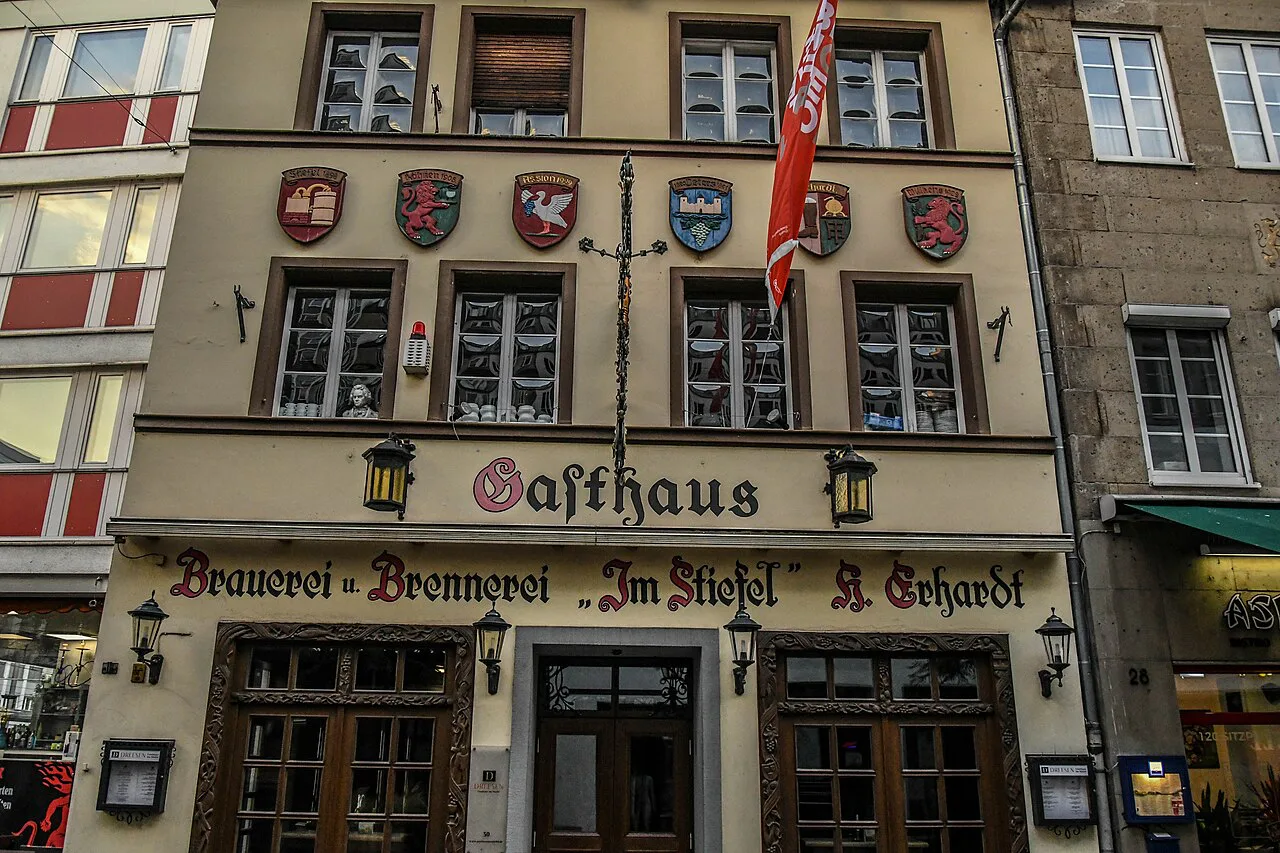
Brauhaus Bönnsch: Bonn's Own Beer and Hearty Classics
Brauhaus Bönnsch is the obvious first stop for anyone chasing a Bonn-specific meal. It brews Bönnsch, a top-fermented pale beer in the Kölsch family, served in small glasses. The kitchen leans on deftige Klassiker, the hearty pork-and-potato cooking that goes with this kind of beer.
It also looks after families: children up to 14 get a scoop of vanilla ice cream with dishes such as Kalbsbratwurst (veal sausage) or Schnitzel with sides, which makes it a sensible pick if you are eating with kids. For more Bonn breweries and where their beer turns up on tap, see the dedicated brewery guide.
Go at midday if you want a calmer room; the evening crowd is louder and the beer flows faster.
Wirtshaus Salvator am Martinsbrunnen: Bürgerliche Küche by the Fountain
Wirtshaus Salvator am Martinsbrunnen is the address for straightforward bürgerliche Küche — the German term for home-style bourgeois cooking, the roasts and dumplings that anchor a traditional menu. The kitchen turns out Weißwurst "Münchner Art" (Bavarian veal sausage, traditionally eaten before noon), Schweinebraten and Käsespätzle, the soft egg noodles folded with melted cheese and topped with crisp onions.
Its kitchen runs from 11:30 to 22:00, a long window that makes it the most flexible lunch stop of the group if your day in Bonn is built around shopping or errands in the center. Order the Käsespätzle if you want a vegetarian German plate that is not a side salad; it is the classic meat-free choice on this kind of menu.
For more meat-free options around the city, including places that go beyond the token vegetarian dish, the vegan Bonn guide covers the map.
Bavarian Beer Gardens on the Rhine: Schänzchen, Bundeshäuschen and Alter Zoll
Biergarten Schänzchen opened in 1990 behind the surviving wall of the old Roman camp at Rosental 105, with a terrace under chestnut trees looking across to the river shipping. The menu is Bavarian: Weißwurst, Leberkäse, Bratwürstl (small grilled sausages), Schweinshaxe and Kartoffelsalat (potato salad), with Paulaner Weißbier or a Maß of Löwenbräu to drink. It opens for the season from March and serves outside only in dry weather, so a wet forecast changes the plan.
Bundeshäuschen at Oberkasseler Ufer 4 mixes Bavarian beer-garden style with Rhineland charm, close enough to the water that ships seem to pass at arm's length. Its kitchen leans on Waldbeerpfannkuchen (pancakes with forest berries) and fresh asparagus in season, and it closes on Tuesdays — the clearest Ruhetag (rest day) among the riverside options.
Alter Zoll at Brassertufer is the most central of the three, a beer garden on the riverbank with a view across to Beuel and the Siebengebirge hills. It serves pizza, pasta and coffee alongside beer and lemonade, and you can carry drinks to the lawn next door for a picnic-style stop. If your group wants a riverside table without a full Bavarian menu, this is the simplest choice.
Rheinlust in Beuel: The All-Day Option
Rheinlust on the Beuel bank of the Rhine covers breakfast through dinner, with burgers, pizza and a broad menu that suits a group that cannot agree. It sits directly on the Beuel Rhine promenade, so the terrace catches sun through the day. Expect waits at busy times; this is a popular spot rather than a quiet one.
Bahnhöfchen, a few minutes along the Beuel shore at Rheinaustraße 116, is the other all-day choice, with house-made soups and salads, a strong vegetarian list including Gnocchi à la Rucola, and breakfast buffets at weekends. For a Bonn breakfast that runs later than a hotel spread, it is a practical starting point.
How a German Meal in Bonn Works
At a Brauhaus or Wirtshaus, take a seat and expect a server to come to you; in beer gardens you often order at the counter and carry your tray. Bönnsch is poured small and refilled without asking, so keep track if you plan to drive. Cash is still common in smaller Rhineland venues, and card acceptance varies by house.
Book a table for dinner at the riverside gardens on warm weekends, when the terraces fill early. Tuscolo, the pizzeria group with an Altstadt branch, gets crowded enough in the evening that the local press advises reserving; the same logic applies to any popular venue on a Friday or Saturday.
Lunch is usually the budget window, and German kitchens push their midday plates. If you want a coffee after the meal, the cafés in Bonn guide has the addresses; for a full German menu beyond the dishes named here, see what to eat in Bonn.
Which Bonn German Restaurant Fits Your Evening
Pick Brauhaus Bönnsch for the Bonn-specific beer and a family table, Wirtshaus Salvator for a long lunch window and classic bürgerliche Küche, and Schänzchen or Bundeshäuschen for a Bavarian evening under trees with the river in view. Alter Zoll wins if you want a central riverside drink without a full menu, and Rheinlust or Bahnhöfchen if the group's tastes diverge.
If your priorities are wider than German food — Italian, Asian or just a good burger — the best restaurants in Bonn covers the full city list. Vegetarians should head to Bahnhöfchen's menu or the vegan guide rather than settling for a side dish.
Brauhaus, Wirtshaus or Beer Garden?
Choose Brauhaus Bönnsch if you want to taste Bonn in one glass and one plate, Wirtshaus Salvator if lunch timing matters more than atmosphere, and a Rhine beer garden if the weather is the point of the evening. Each delivers a different version of German eating in Bonn, and none needs more than a table booking and a clear idea of what to order.
Explore more Bonn guides
Frequently Asked Questions
Do you wait to be seated in a German restaurant?
In a Brauhaus or Wirtshaus, walk in and look for a free table; a server will come to you. In beer gardens you often order at the counter and carry your own tray, so there is no host to seat you.
What beer should I order in Bonn?
Order Bönnsch at Brauhaus Bönnsch — it is Bonn's own top-fermented pale beer, served in small glasses. The riverside Bavarian gardens pour Paulaner Weißbier and Löwenbräu instead.
Is Bonn still the capital of Germany?
No. Bonn was the capital of West Germany and then of reunified Germany until the government moved to Berlin, and it remains a major university and UN city on the Rhine. For a food trip, that history is context rather than a reason to visit.
Sources
Notes for your next German food trip
Optional updates to our guides.
You might also like
Continue reading
More guides you'll find useful