
Bergmann Brauerei in Dortmund: What to Know Before You Go

Bergmann Brauerei is a Dortmund brewery that traces its name to a company founded in 1796, closed in 1972, and brewed again since 2007. The modern operation is based at Elias-Bahn-Weg 2 in Dortmund and pours its beer at several of its own spots rather than at a single taproom. This guide covers the short history, the beer styles to look for, and which of the Bergmann pour points — a standing beer hall, a kiosk, a lakeside standing bar or a beer garden — suits your plan.
What Bergmann Brauerei is
The brand's arc is long. A brewery founded by Wilhelm Dietrich Johann Bergmann in Dortmund in 1796 grew into one of the city's standard beers, was bought by the Dortmunder Ritter Brauerei in 1971, and shut as an independent brewery in 1972. The microbiologist Thomas Raphael revived the trademark — buying the lapsed rights after spotting an old Bergmann stein at a flea market — and the brewery has brewed Bergmann beer again since 2007, describing it as continuing the 1796–1972 tradition.
The brewery presents itself as a small, craft-minded project built around reviving Dortmund's beer culture, working under the motto “Harte Arbeit. Ehrlicher Lohn.” Its lineup runs from everyday classics and specials to a rotating Sud des Monats, which makes it a useful counterpoint to the big Dortmund producers if you want to see how the city's beer scene has changed.

Where the brewery is
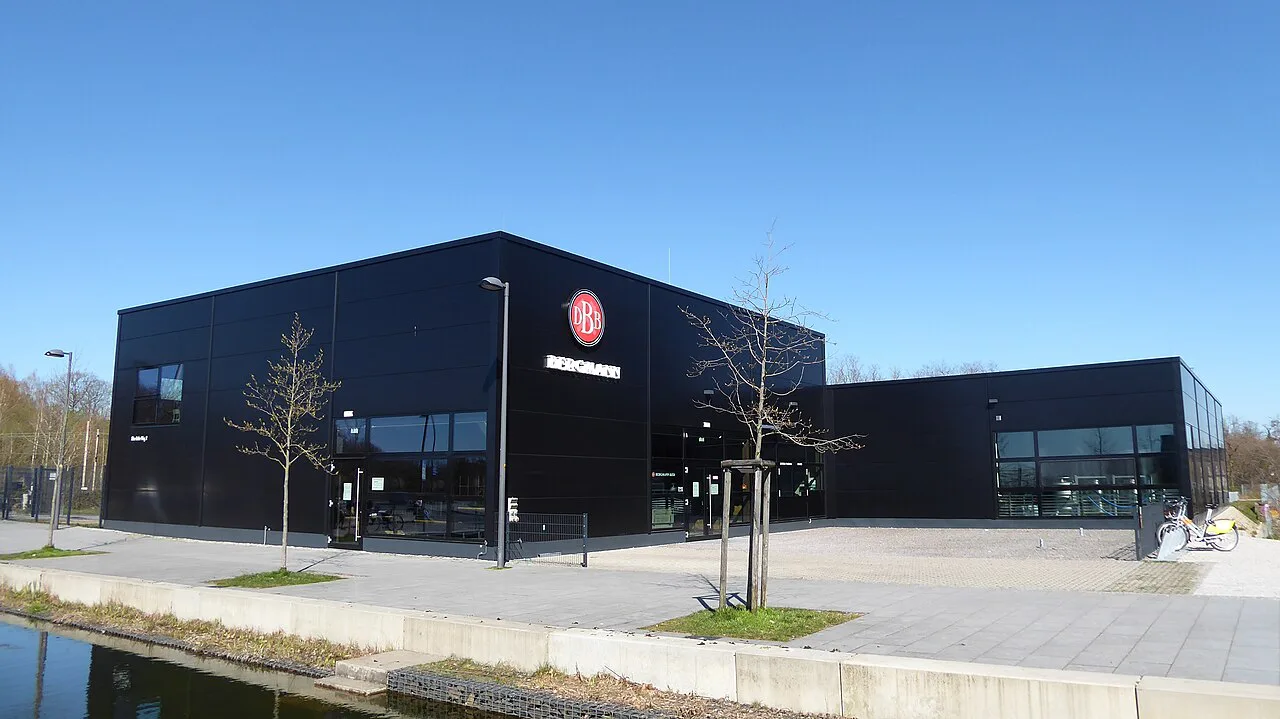
Bergmann Brauerei is based at Elias-Bahn-Weg 2 in Dortmund. The brewery's own site lists that address as its company home, and it names its separate drinking spots on the same site: a Stehbierhalle (standing beer hall), a Kiosk, a Stehausschank am Phoenix-See and the Biergarten Haus Rodenberg. Treat the address as the brewery base, and let the brewery's site guide you to whichever of those spots is running when you visit.
The brewery's history runs through several addresses: the original Rahmer Straße 262 site until 1972, followed by brewing at the Vormann Brauerei in Hagen-Dahl and then a move to an old foundry in the Dortmund harbor, where the brewery is based. That wandering history explains why a visitor may encounter the Bergmann name in more than one part of the city.

The beer to order
Start with the classics, then ask what is pouring from the specials. Bergmann brews a core range of classic beers alongside specials, and it also releases a Sud des Monats, a monthly brew that rotates through the year. Ordering a small glass of the monthly beer next to a classic is the quickest way to taste the range.
The brewery groups its beer into Klassiker (classics), Spezialbiere (specials), the Sud des Monats and Fassbier (draught). The classics are where most visitors start; the specials are where the brewers stretch out. The setting matters as much as the liquid — Bergmann pours its beer at its own spots rather than at a single taproom.
Drink at an easy pace and keep rounds small; German pours are often smaller than American pints, which makes a tasting-style order practical. If you want to compare, the Kronen Brauerei Dortmund is another local name worth knowing, and the Dortmunder Actien Brauerei is worth a look for context.
How the brewery serves visitors
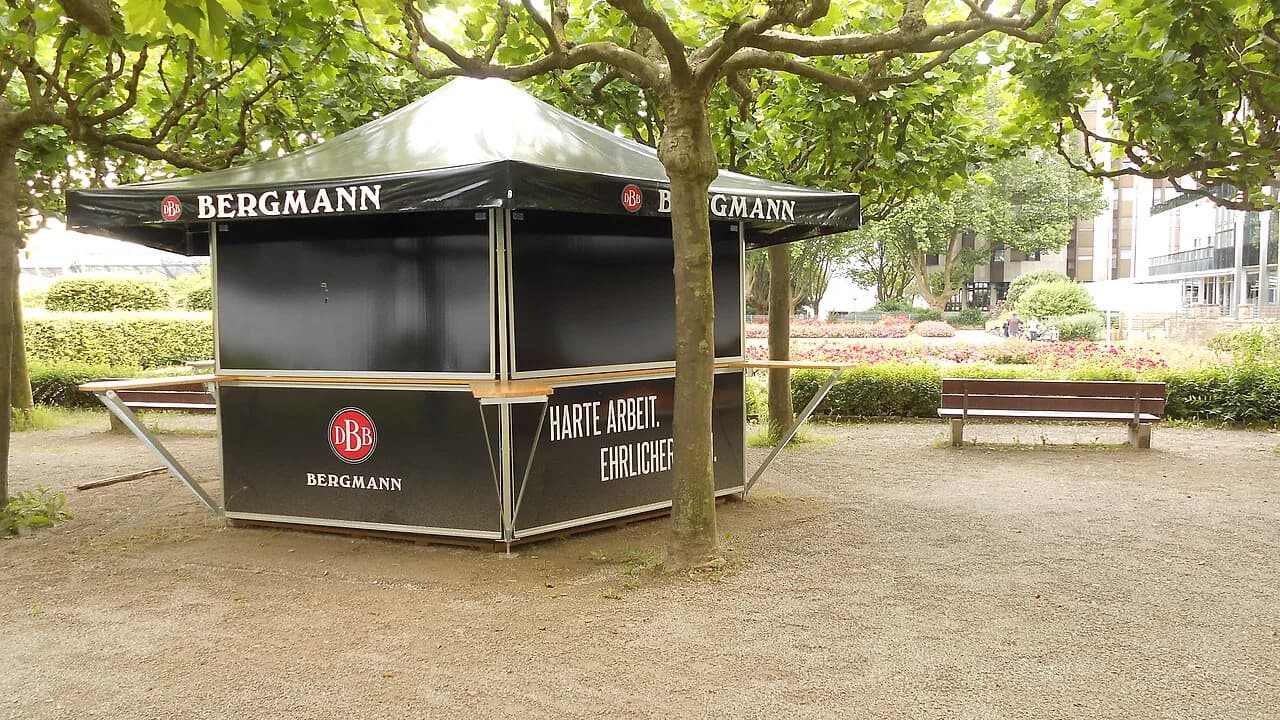
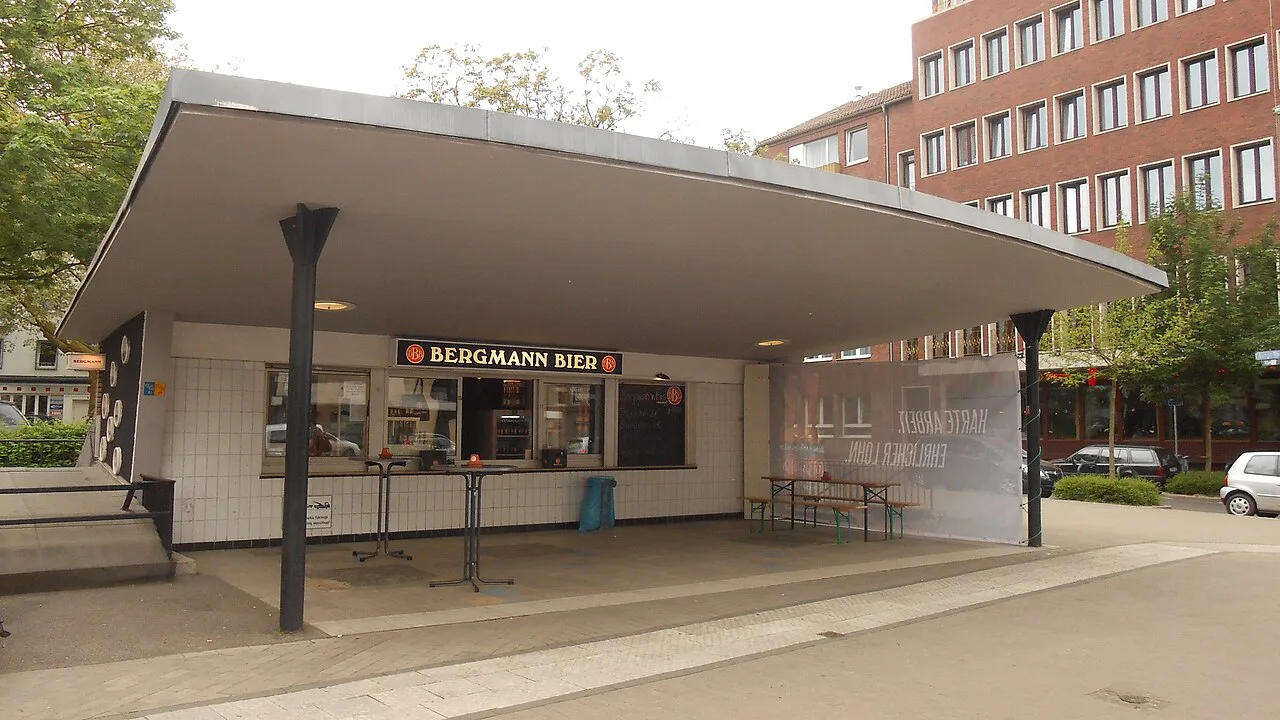
Bergmann names four drinking spots on its site. The Stehbierhalle is a standing beer hall, the Kiosk a small stop, the Stehausschank am Phoenix-See a standing bar by the lake, and the Biergarten Haus Rodenberg the beer-garden option. The site presents them as separate experiences, and it also lists the Stehausschank as bookable for events and groups.
For a quick beer, the Kiosk or the Stehbierhalle is the obvious starting point. For a seat in the open air with a group, the Biergarten Haus Rodenberg is the natural choice, while the Phoenix-See spot puts the beer next to a lake in a newer part of the city. Choose by the kind of afternoon you want, not by which is closest.
Bergmann also offers group options and bookable experiences, including renting the Stehausschank and an APE (a Piaggio three-wheeler), which the brewery lists on its own site. If you are bringing a party, look at those before you travel rather than arriving without a reservation.
Fassbier and Tankbier: what a keg and tank order means
For groups, Bergmann fills beer into 10-liter kegs with an Anstich (tap fitting), 30-liter kegs and tanks. The 10-liter format arrives with a tap fitting and is the most manageable for a small gathering, while the 30-liter keg and tank formats are aimed at larger gatherings or events. Know the format before you commit, because the larger sizes need space, the right tap setup and several people drinking.
The brewery sells through both a Handel und Gastro channel (trade and restaurant customers) and its own Brauereiverkauf (brewery sales), and the brewery site also offers online brewery sales. If you are organizing a gathering, ask about the tap setup as well as the volume; a keg without the right tap is just a heavy container.
What the name means in Dortmund beer history
Dortmund was once one of Europe's great brewing cities, and Bergmann belonged to that industrial-era beer culture. In the 1960s the brewery employed 109 people and produced around 96,000 hectoliters of beer a year. The closure in 1972 came as Dortmund's brewery count collapsed.
That story is why the Bergmann name carries weight locally: it is a revival of a brand that many Dortmund families remember. The modern company presents itself as part of that continuity on its own site, where it tells its history and states its aim of reviving the city's beer culture.
Where to buy Bergmann beer beyond the taproom
If you want to take the beer home or stock a fridge, look beyond the brewery. Bergmann beer is sold through the brewery's trade and restaurant channel and its own brewery sales, and the brewery site also offers an online shop. Ask which formats are available at the moment.
For a rough sense of reach, Hopfen sei Dank reported that the brewery was stocked in more than 80 shops. Treat that as an indicator rather than a current list, and check with the Bergmann Brauerei for the latest picture.
Which Bergmann spot fits your day?
Pick your spot by mood. A standing beer at the Stehbierhalle or the Phoenix-See bar is quick and social, the Kiosk is the smallest footprint, and the Biergarten Haus Rodenberg is the one to choose when you want to sit outside with a group.
If your main interest is the beer itself, start with a classic and a Sud des Monats, and ask about the specials. For local plates alongside the pours, Zum Alten Markt in Dortmund is a useful reference point, and the Dortmund Attractions: 5 Visitor Guides covers the rest of the city's food and drink stops.