
Schlenkerla Bamberg: What to Order at the Smoked-Beer Tavern

Schlenkerla is the Bamberg brewery tavern that made Rauchbier famous, and the one beer to order on a first visit is the Aecht Schlenkerla Rauchbier Märzen: a dark, bottom-fermented lager whose malt is smoked over beechwood fire before brewing. The tavern serves it the old way, drawn down from oak barrels rather than pushed through a tap line. This guide covers where the house sits in the old town, why the sign says Heller-Bräu, how the seasonal beers rotate through the year and what to eat alongside the smoke.
Rauchbier simply means smoked beer, and it is a Franconian specialty rather than a Bavarian-wide style. The smoke you taste is not added flavoring: the barley malt is kiln-dried over an open beechwood fire, so the grain itself carries the aroma into the finished beer. Expect a campfire-and-bacon impression on the nose that softens into something drier and cleaner on the palate.
What Schlenkerla is
Schlenkerla is a working brewery with an attached tavern in the middle of Bamberg, not a museum or a tasting room. Brewing and serving sit under one roof, and the house has been known for smoked beer far beyond the city limits, drawing both visitors and locals who come specifically to drink it.
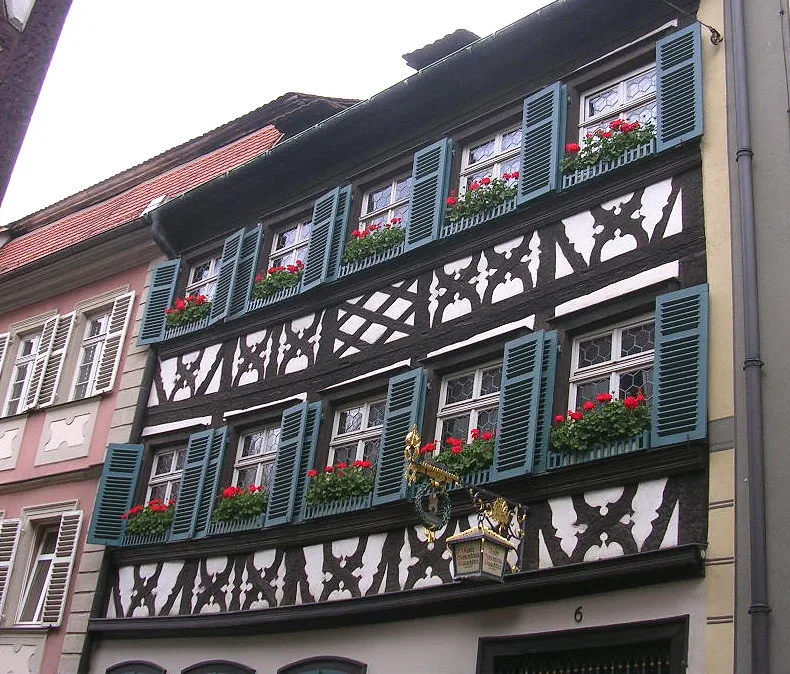
The building itself is part of the order of business. The address in the Dominikanerstraße is the historic taproom house, while the brewery site sits up on the Oberer Stephansberg. That split explains why you drink in one place, and it is under the Stephansberg that the brewery still stores its Rauchbier in rock-cut cellars before it reaches the taproom.
Where it is in Bamberg
The tavern stands in the Dominikanerstraße, a short lane in the old town within easy walking distance of the river and the main pedestrian axes. If you are orienting yourself around Bamberg for the day, this is the central, walkable part of the city, and the tavern fits naturally into an afternoon on foot.
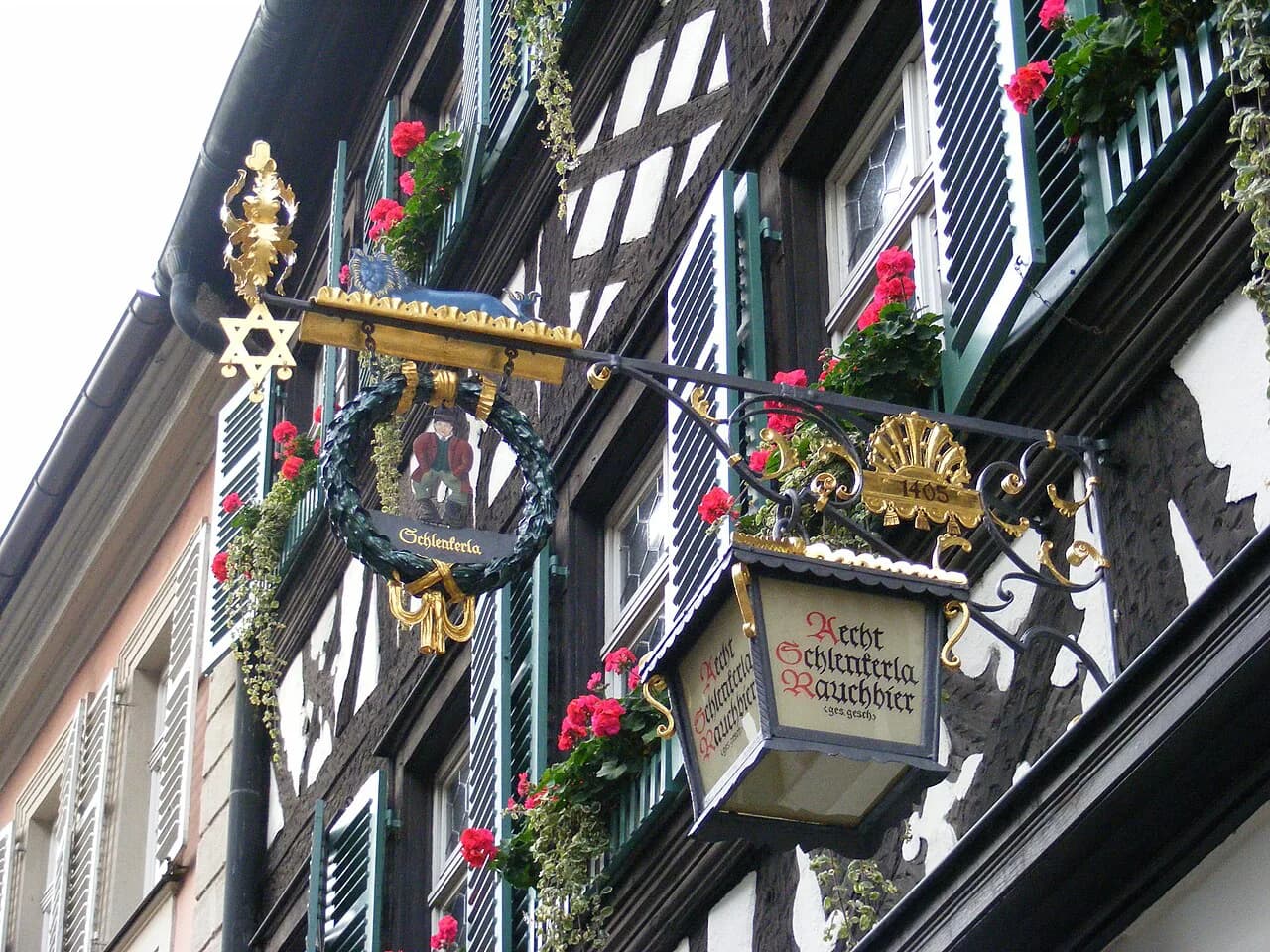
Look for Heller-Bräu rather than Schlenkerla on official signage and paperwork. The brewery's official name has been Heller-Bräu since 1767 and remains so today, while Schlenkerla is the nickname that stuck to both the house and the beer. Knowing the difference saves you a confused minute at the entrance and makes sense of listings and labels.
Why the tavern is called Schlenkerla
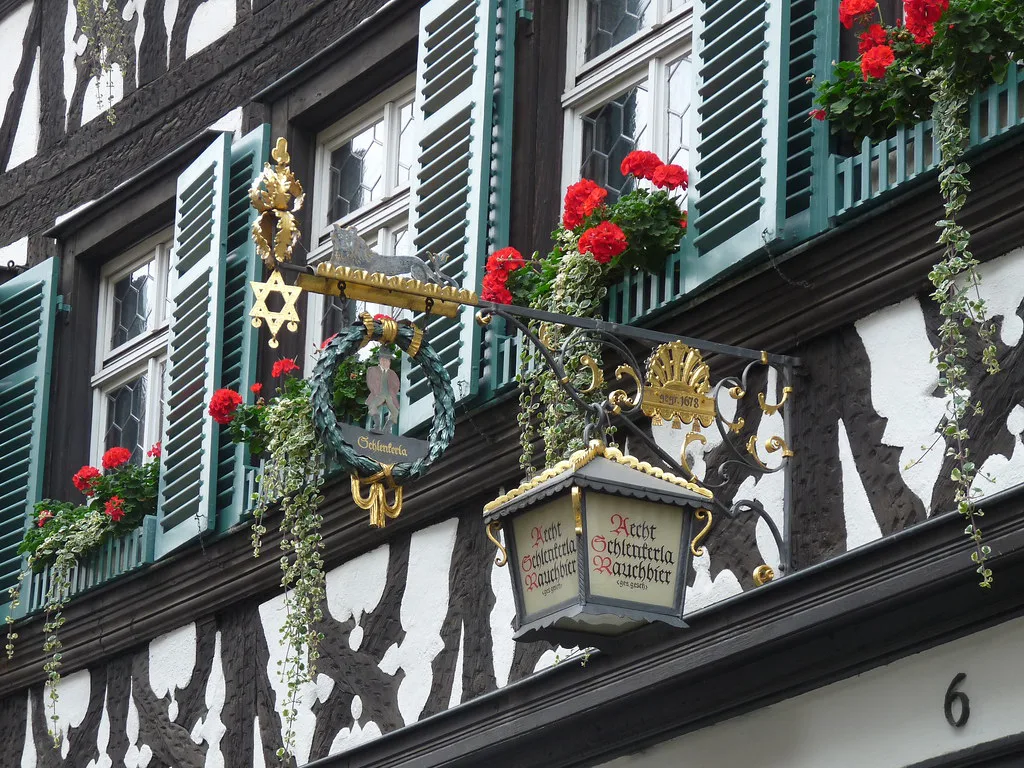
The name comes from a person, not a recipe. A former brewer of the house, Andreas Graser, walked with a noticeable sway after an accident, and people around town took to calling him the Schlenkerla, a diminutive of the Franconian word for swinging or dangling. The nickname migrated from the man to the brewhouse and never left.
The house history reaches back much further than the nickname, which only appears from the late nineteenth century. The building was first documented in 1405 as the Haus zum blauen Löwen, and brewing on the site is recorded from at least 1538. The brewery's managing director, Matthias Trum, notes that the Stephansberg production site was already in a brewer's hands in 1387, so its beer history may run even longer than the parent house.
What to order: the Märzen
Start with the Märzen, the flagship. It is dark, bottom-fermented and brewed with Schlenkerla's own beechwood-smoked malt, then served from oak barrels in the tavern in the traditional gravity-fed way. At 5.1% alcohol by volume it is a session-strength lager, so one or two glasses across an evening is realistic for most drinkers.
The beer also leaves the tavern: the Märzen is sold in bottles and steel kegs, exported across Europe and beyond, and the brewery keeps an online shop. The bottled version delivers the same beechwood smoke, but the unfiltered beer drawn from the wooden barrel is the tavern experience. If you want the one that only exists on site, sit down inside.
The rest of the lineup, by season
Schlenkerla's range follows the calendar, which is useful when you plan a visit around a specific beer. Kräusen, an unfiltered amber lager at 4.5%, is drawn from the wooden barrel only from June 1 to the end of August and is the lightest way into the smoke. Urbock, a stronger smoked bock at 6.5%, takes over for the strong-beer season from October into early January.
Fastenbier fills the run-up to Easter. It is an unfiltered amber smoked beer at 5.9%, brewed for Lent and available only from Ash Wednesday to Easter, again in the tavern from oak barrels. Beyond these, the house also produces a lightly smoked Weizen, a Helles Lager, a Rotbier, a Schwarzbier and other limited sorts, so a short visit can sample across styles rather than repeating one glass.
How strong the beers are
The main sorts sit in a narrow band that suits an evening of drinking rather than a sprint. Märzen is 5.1% alcohol by volume, Kräusen 4.5%, Fastenbier 5.9% and Urbock 6.5%, all as published by the brewery. Order the Urbock last if you are working through several, since it is the heaviest of the regular lineup and its malt sweetness carries the smoke furthest.
The smoke itself is the bigger variable. A first Rauchbier often tastes strongly of campfire, and the second tastes like beer again; that is the usual adjustment, not a sign you ordered badly. If the smoke feels overwhelming, a Helles Lager in the same room resets the palate without leaving the tavern.
How the tavern works
Inside, the beer comes from oak barrels served by gravity, and the rooms have the low ceilings and worn wood of a house that has been pouring for centuries. The brewery still stores its Rauchbier in rock cellars under the Stephansberg, which it describes as the last Bamberg brewery to lager its beer that way. Arrive with time to sit rather than planning a quick stop.
It is a tavern, so there are no tickets and no entry fee: you take a seat and order. The brewery publishes its own contact details and table-reservation route through its website, which is the place to confirm hours and whether a table can be booked before you build an evening around it.
What to eat with smoked beer
Smoked malt overwhelms delicate food, so order accordingly. Franconian pub cooking works because it is built on pork, onions, dark gravy and bread dumplings, flavors that can stand next to a beechwood beer without disappearing. The classic Bamberg plate is the Schäuferla, a roast pork shoulder with a crisp crust, served with dumplings and gravy, and it is the natural partner to the Märzen.
If you want the smoke and the food to echo each other, order the Rauchbier alongside smoked pork or a plate of cold cuts and bread rather than something light and acidic. Simpler dishes, soup or a salad, get buried by the beer; heavier fare does not. It also helps to alternate: a Helles between two Rauchbiers keeps the palate sharp through a long meal.
Schlenkerla in Bamberg's beer landscape
Bamberg has several breweries within the old town, so Schlenkerla is one stop on a short walk rather than the whole evening. Brauerei Spezial, a few minutes away on the Obere Königstraße, brews its own smoked beer and its own unfiltered lager, which makes a direct comparison easy on the same day. Each house smokes its malt its own way, and the difference shows up in the glass.
Mahrs Bräu Bamberg, on the Wunderburg side of town, is known for its ungespundetes Lager and a beer garden that fills in summer, and it gives you a non-smoked yardstick for the city's brewing. For a smaller, quieter room, Brauerei Greifenklau sits up by the Grötschenmühle path and pours its own unfiltered beers away from the tour groups. If you want to sample widely, pick two of these and give each a proper hour.
Beyond the brewpubs, Bamberg's beer culture extends to Kellerbier and lager houses such as Fässla and Keesmann, each with its own taproom and its own regulars. None of that displaces Schlenkerla: the smoked beer there is the reason the city has a beer reputation abroad at all, and a first visit belongs there. Use the wider cluster to plan the rest of the walk.
Is Schlenkerla worth your evening?
Yes, if you want the beer that put Bamberg on the drinking map, and yes especially if you go in willing to order the Märzen from the barrel and eat pork shoulder with it. The payoff is a smoky, dark lager in a room built for it, and the seasonal sorts give a reason to come back in summer for Kräusen or in autumn for Urbock. If smoke is not your thing, order a Helles and treat the room as the attraction.
Build the rest of the day around a short walk between Bamberg's brewpubs rather than a single stop, and confirm the tavern's current hours and reservation options on its own site before you commit an evening. The historical detail is a bonus; the beer is the point.